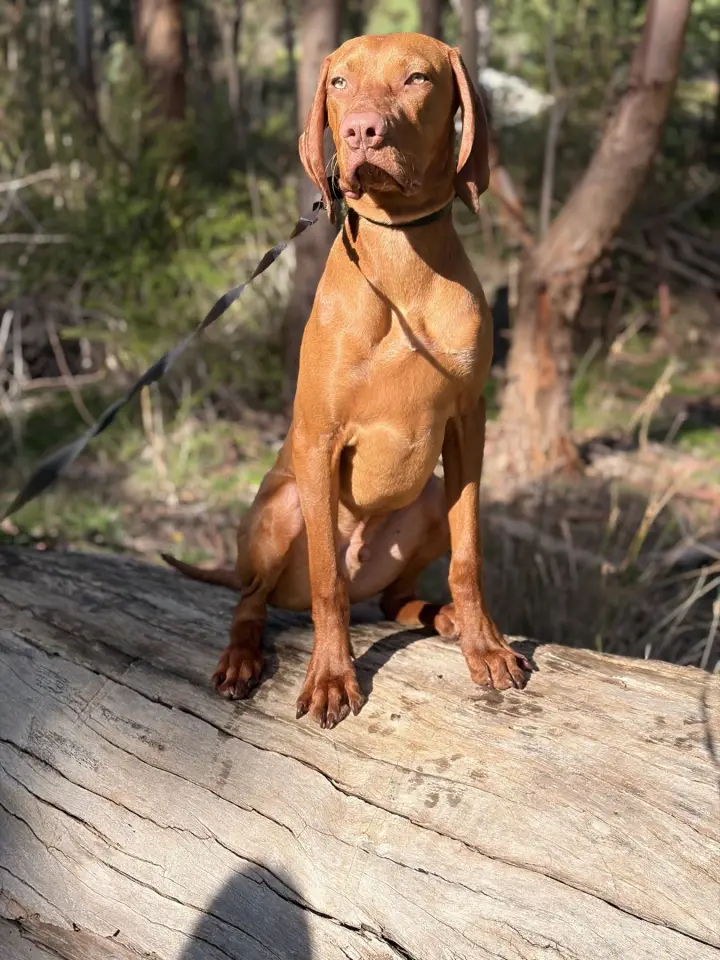
Before
Poppy's walks had been shrinking for a year. Her hips were stiff in the mornings, so a loop of the park became a lap of the block, and the lap of the block became a slow amble to the corner and back.
Around six every evening she'd start pacing: kitchen, hallway, front door, kitchen. Claire assumed it was age. Her vet said the joints were managed. The restlessness was something else.
What Henry noticed
A senior Lab with arthritis still has a Lab's nose and a Lab's appetite for problems. What she'd lost wasn't energy. It was anything to spend it on.
So Henry filtered out jumping, fetch and long walks entirely, and leaned the week toward scent and short puzzles: work that tires the brain without loading the joints.
“I'd been cutting her world down to protect her hips. Henry gave it back in a different shape.”
Written with Claire, Poppy's owner
What changed
By the end of the first week the six o'clock pacing had mostly stopped. She does a scatter feed before dinner now and falls asleep on the rug straight after.
The walks are still short. They're just slower, and she sniffs every lamppost on purpose.